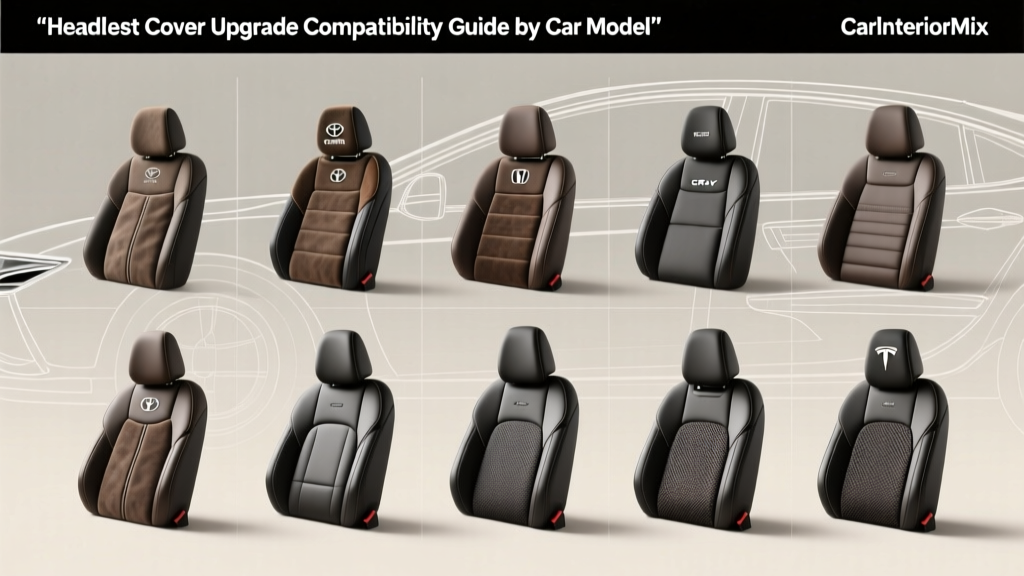
Headrest Cover Compatibility by Car Model | CarInteriorMix
Headrest covers are one of those interior upgrades that seem simple?until you try to buy a set and realize your ?standard? headrests aren?t standard at all. Between removable headrests, fixed (non-removable) designs, active head restraints, integrated monitors, and odd-shaped sport seats, compatibility can make or break the purchase.
A good headrest cover does more than look nice. It protects high-touch surfaces from skin oils, hair products, sunscreen, pet drool, and UV fading. For families, rideshare drivers, and anyone who parks outside, it?s a low-cost way to keep seats looking newer for longer. For enthusiasts, it?s also a clean way to match leather, suede, or stitching themes without replacing an entire seat.
This guide walks you through how to confirm fitment by car model and seat type, what measurements actually matter, and which cover styles work best in popular vehicles. You?ll also get step-by-step installation tips, product comparisons, and common mistakes that cause loose, wrinkled, or unsafe headrest cover installs.
Why Headrest Cover Compatibility Is Tricky
Two cars can share similar seat dimensions and still require different headrest cover designs because of the way the headrest mounts, tilts, or integrates safety features.
Key differences that affect fitment
- Removable vs. fixed headrests: Many economy cars and older sedans have removable headrests with metal posts. Some coupes, sports cars, and certain trims use fixed headrests that are part of the seatback.
- Active head restraints (AHR): Found in many Japanese and European vehicles; the headrest moves in a rear impact. Covers must not restrict movement.
- Integrated headrests: Common in sport seats and some luxury vehicles; the headrest is molded into the seatback, often with aggressive bolsters.
- Rear headrest shapes: Rear headrests are often smaller, thinner, or differently contoured than front headrests.
- Entertainment systems: Some SUVs and luxury sedans have headrest-mounted screens; covers must accommodate screen openings and wiring clearance.
Headrest Types and What Covers Fit Each
Type 1: Removable post-mounted headrests (most common)
Best cover styles: Slip-on with elastic hem, zip-back covers, or tailored ?cap? style covers.
What to check:
- Headrest width and height
- Depth (front-to-back)
- Post spacing and post diameter (if the cover wraps around posts)
Type 2: Fixed headrests (non-removable)
Best cover styles: Open-bottom ?hood? style or tailored covers that wrap the headrest and part of the seatback.
What to check:
- Whether the cover requires removing the headrest (many do)
- Seatback contour near the headrest (bolsters and curves can cause wrinkles)
Type 3: Integrated sport/luxury headrests
Best cover styles: Custom-pattern or vehicle-specific covers; universal covers often look loose.
What to check:
- Side bolsters and ?wings? width
- Headrest thickness (sport seats can be slim but tall)
- Any embossed logos, vents, or speaker grilles
Type 4: Headrests with built-in screens
Best cover styles: Screen-compatible covers with a cutout flap or clear window, or covers designed specifically for entertainment headrests.
What to check:
- Screen placement and size
- Power/HDMI/USB wire routing
- Heat management (avoid thick foam-backed covers that trap heat near electronics)
How to Confirm Compatibility (Measurements That Matter)
Most returns happen because the cover is too small in depth, or it?s the right size but the wrong shape. Measure first?two minutes with a tape measure can save you a week of shipping and frustration.
What to measure
- Width: side-to-side at the widest point.
- Height: top to bottom of the headrest cushion area.
- Depth: front face to rear face at the thickest point.
- Post spacing (removable headrests): center-to-center between posts.
- Post exposed length: how much post is visible above the seatback (helps if using post-wrap styles).
Quick fitment rule of thumb
- If your headrest is thicker than 4.5 inches, many universal slip-ons will feel tight and pull upward.
- If your headrest has strong side bolsters, choose a tailored or zip-back design to avoid ?corner lift.?
- If you have active head restraints, avoid overly stiff covers or ones that strap tightly behind the headrest.
Compatibility Guide by Car Model (Common Fit Patterns)
Exact seat specs vary by year and trim, so treat these as best-fit patterns. When shopping, match your headrest type first, then confirm your measurements.
Toyota (Camry, Corolla, RAV4, Highlander, Tacoma)
- Most trims: Removable post-mounted headrests front and rear.
- Common fit: Universal medium slip-on covers fit well on Corolla and Camry rear headrests; front headrests often need a deeper cover.
- Watch for: Active head restraints on many models?avoid stiff, strap-heavy designs.
Real-world example: A 2018 Camry owner often finds the ?universal? cover fits the rear but looks tight on the front because the front headrest is deeper and more contoured.
Honda (Civic, Accord, CR-V, Pilot)
- Most trims: Removable headrests; sporty trims can have taller headrests.
- Common fit: Zip-back or elastic-hem covers work well; tailored covers look best on Accord and CR-V.
- Watch for: Rear center headrest on some models is smaller?consider buying a mixed-size kit or a separate center cover.
Ford (F-150, Explorer, Escape, Mustang)
- Trucks/SUVs: Often removable headrests; front headrests can be larger and squarer.
- Mustang: Sport seats may have aggressive shaping; universal covers can wrinkle.
- Common fit: Larger ?SUV/truck? size covers or zip-back for F-150/Explorer; consider model-specific for Mustang sport seats.
Chevrolet/GMC (Silverado/Sierra, Tahoe/Yukon, Equinox)
- Full-size SUVs: Big, boxy headrests?standard car-size covers often come up short in depth.
- Common fit: Deep-pocket covers or ?XL? headrest covers; thicker materials can look premium but should remain flexible.
- Watch for: Third-row headrests are frequently smaller or differently shaped.
Nissan/Infiniti (Altima, Rogue, Pathfinder)
- Most trims: Removable headrests with active restraint systems common.
- Common fit: Soft, flexible slip-ons or zip-back covers that don?t restrict movement.
- Watch for: Tight strap systems that cinch down behind the headrest (can interfere with AHR motion).
Hyundai/Kia (Elantra, Sonata, Tucson, Santa Fe, Sportage, Telluride)
- Most trims: Removable headrests; some have slimmer profiles with rounded corners.
- Common fit: Universal ?medium? fits many sedans; SUVs often need a deeper cut.
- Watch for: Two-tone interiors?choose a cover color that matches either the main seat color or the accent panels to avoid looking ?off.?
BMW/Mercedes-Benz/Audi (3 Series, C-Class, A4, Q5, etc.)
- Common designs: Contoured headrests and upscale leather finishes; some integrated headrest designs in sport trims.
- Common fit: Tailored or semi-custom covers; universal slip-ons can look baggy or shift over time on smoother leather.
- Watch for: Heated/ventilated seat components are in the seatback, but you still want breathable cover materials to avoid heat buildup.
Tesla (Model 3, Model Y, Model S, Model X)
- Common designs: Integrated headrests (non-removable) with a clean, minimalist shape.
- Common fit: Model-specific covers generally fit best; universal covers often slide because the vegan leather is slick and the headrest is integrated.
- Watch for: Covers that require headrest removal won?t work; choose wrap-style designed for integrated headrests.
Step-by-Step: How to Choose the Right Headrest Cover
- Identify your headrest type: removable post-mounted, fixed, integrated, or screen-equipped.
- Measure width/height/depth: write the numbers down; compare to the product size chart (don?t guess).
- Decide your goal:
- Protection: choose washable, stain-resistant fabric (neoprene, polyester, PU leather).
- OEM+ look: choose stitched PU/leatherette or tailored microfiber/suede style.
- Comfort: avoid rough textures; look for soft, breathable fabric.
- Match the set to your seating layout: 2 front + 3 rear, captain?s chairs, third-row, or missing rear center headrest.
- Confirm special features: active head restraints, screens, or unusual headrest shapes.
Step-by-Step: Install Headrest Covers Cleanly (No Wrinkles)
- Clean the headrest first: wipe leather/vinyl with a damp microfiber and a gentle interior cleaner. Covers grip better on clean surfaces.
- Warm the cover slightly: let it sit in the sun for 5?10 minutes (especially PU leather). It stretches more evenly.
- Align seams and corners: start at the top and work downward, pulling evenly left-to-right.
- For removable headrests:
- Raise headrest to the highest position.
- Slide the cover on.
- Route any straps or Velcro closures away from post release buttons.
- For zip-back covers: zip slowly while smoothing the front face to avoid puckering along the edges.
- Final check: press the cover firmly around the perimeter and confirm the headrest can adjust normally (height/tilt/motion).
Product Recommendations: Which Headrest Cover Style Should You Buy?
Universal slip-on (elastic hem)
Best for: budget upgrades, quick installs, rentals, and standard removable headrests.
- Pros: affordable, easy to wash, widely available.
- Cons: can look loose on contoured headrests; may ride up on thick headrests.
Zip-back or Velcro-back tailored covers
Best for: drivers who want a tighter, cleaner look without going fully custom.
- Pros: better shape control; less shifting over time.
- Cons: zippers/Velcro can be felt if poorly designed; must align carefully.
Vehicle-specific / semi-custom headrest covers
Best for: integrated headrests (Tesla-style), sport seats, luxury interiors, and enthusiasts.
- Pros: best fit and least wrinkling; looks closest to OEM.
- Cons: costs more; must match your exact seat trim and year range.
Material comparison (quick guide)
- PU leather/leatherette: easy wipe-clean, upscale look; can get warm in hot climates.
- Neoprene: durable, water-resistant, great for kids/pets; more casual look.
- Microfiber/suede-style: premium feel, good grip; needs more careful cleaning.
- Cotton/poly blends: breathable and washable; may stain easier depending on weave.
Practical Tips That Make a Big Difference
- Buy a mixed-size set when possible: many cars have larger front headrests and smaller rear ones.
- Match stitching to your interior accents: subtle contrast stitching can make a universal cover look custom.
- If you park in the sun: choose UV-resistant materials and lighter colors to reduce heat soak.
- For pets: prioritize nail-resistant fabric and a snug fit so the cover doesn?t twist when your dog steps on it.
- For rideshare/taxis: choose wipe-clean materials and keep a spare set to swap while washing.
Common Mistakes to Avoid
- Assuming ?universal? means perfect: universal usually means ?fits a range,? not ?fits like OEM.? Always check depth.
- Blocking headrest adjustments: if the headrest can?t move normally, the cover isn?t compatible or is installed incorrectly.
- Over-tightening straps behind active head restraints: can restrict motion and defeat the safety design.
- Ignoring rear headrests: mismatched rear covers can make the interior look unfinished (and rear passengers cause wear too).
- Picking the wrong material for your climate: some leatherette covers look great but can feel hot in summer without tint or sunshades.
FAQ: Headrest Cover Upgrade Compatibility
Will headrest covers interfere with airbags?
Headrest covers generally don?t affect side airbags because airbags deploy from the seatback bolsters, not the headrest. That said, avoid routing straps or bulky seams down the seatback sides where airbags deploy. If you?re using a wrap-around style that extends onto the seatback, confirm it?s labeled as compatible with side-airbag seats.
How do I know if my car has active head restraints?
Check your owner?s manual under ?seats,? ?head restraints,? or ?whiplash protection.? Some headrests also have markings like ?AHR.? If you?re unsure, choose a flexible cover with minimal rear strapping.
Can I use the same cover for front and rear headrests?
Sometimes, but many vehicles have larger front headrests and smaller rear ones. If your rear covers look loose or your front covers feel too tight, you?ll get a better result with a mixed-size kit.
Do headrest covers work on fixed or integrated headrests?
Yes, but you?ll usually need a wrap-style or vehicle-specific design. Covers that require removing the headrest won?t work on integrated designs (common on some sport seats and many Teslas).
What?s the best headrest cover material for kids and messy passengers?
Neoprene or wipe-clean PU leather are the easiest to maintain. Neoprene resists spills and sweat; PU leather wipes clean quickly. If you?re dealing with frequent stains, avoid light microfiber unless you?re comfortable spot-cleaning.
Why does my headrest cover keep sliding up?
The most common causes are insufficient depth (cover is too shallow), a slick seat surface (leather/vegan leather), or a loose elastic hem. A zip-back/tailored design or adding a thin non-slip liner can help.
Next Steps: Get the Right Fit Before You Buy
Start by identifying your headrest type, then measure width, height, and depth. Use those numbers to pick a cover style that matches your goals?easy cleaning, OEM-like appearance, or maximum durability. If your car has integrated headrests or sport seats, lean toward vehicle-specific options for a cleaner look and fewer fitment headaches.
Want more interior upgrade help?from seat cover fitment to cleaning routines and material comparisons? Browse the latest guides on carinteriormix.com and keep your cabin looking sharp mile after mile.